Showing posts with label extreme metal. Show all posts

Thursday, 28 June 2018


Hails. This is my first post of a weekly column that I'll be writing to call readers' attention to the wonders and mysteries behind extreme and black metal, as well as to give recommendations from both Australia and internationally of bands in this vein that must be heard. This first post is just a taste of what's to come.
Religion has always been a central theme when it comes to this genre of metal – whether bands are singing in favour of it or against it. Blasphemy and Satanism are two very common concepts that you’ll certainly hear at some point if you’ve discussed extreme metal. While this is true to an extent, with many bands utilising these concepts in their lyrics and imagery, there is much more to the extreme than meets the eye, or ear in this case. To me, bands that deal with such topics as satanism, for instance, may spark some controversy on first listens. However, what I have come to understand over the years is that many extreme metal bands are more about shining a light on taboo subjects and ideologies.


Here are five extreme metal tracks that are an absolute must-listen, each one stepping into 'blasphemous' and Satanic realms, while bringing together mythology, religion and the occult. While it may be offensive to many, bewildering to some and enlightening to a few, there is no denying the artistic abilities of these bands in conveying messages of such a tendentious nature in a powerful way. 

 https://s3-ap-southeast-1.amazonaws.com/heavy-images/wp-content/uploads/2016/08/10085105/imageedit_9_8606999419.jpg

Behemoth – Ceremony of Shiva
“I am Shiva, Hadit or Beast himself
A song that brings forth the power of the Hindu Lord of Destruction mentioning his Third Eye and the Serpent or ‘Naga’ coiled around his neck. In the Satanic Bible and many other cultures, Shiva is known as the ‘Dark Lord’ and is also another name for Satan.


Rotting Christ – Devadevam
The Greek metal lords honour the Hindu tradition, using sacred mantras such as the ‘Gayatri Mantram’ in the beginning of the track and parts of the ‘Mrtyunjaya Stotram’ throughout, all the while chanting the names of various Gods. What’s absolutely stunning to me is how the band merges the mysticism of an ancient language such as Sanskrit with the crushing sounds of extreme metal.


Al-Namrood Bat Al Tha ar Nar Muheja
Blackened metal from the blazing depths of Saudi Arabia. Need I say more? The very fact that a metal band exists in this country and is considered anti-Islamic is quite amazing, as they could face severe punishment. “We’re fed up with religion. Religion and society fulfil each other.” Truer words have not been spoken.


BatushkaЕктения VII: Истина
Very little is known about this dark, obscure Polish band, except that their sole purpose is to create some of the heaviest, most haunting combinations of black and doom metal tracks you’ll hear. The name of the band translated means ‘Father’, with reference to a priest. What Batushka create is a brooding atmosphere with liturgical chants and gripping tones, the band approach mystical theology and Christianity in a most unorthodox way without actually being a ‘Christian’ band. It’s a bit hard to process but I’ll let the music speak for itself.


Sheidim – Amrita
Sheidim – a very obscure word in Hebrew that means demon, and is apparently used only two times in the holy book of Tanakh. This essentially describes the ominous existence of Spanish black metallers Sheidim and also fits the theme of this article. What's interesting about this particular song is that the word 'Amrita' derived from Sanskrit word 'Amritam' which refers to the Nectar of Immortality. I really admire bands that are able to bring together elements of different cultures into their music. 


Sunday, 25 June 2017

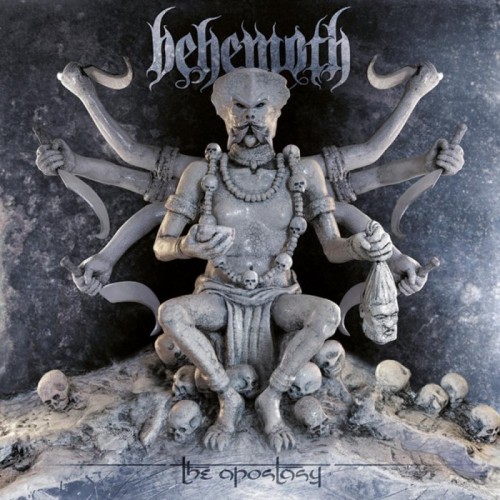
Analysing Album Art: Behemoth – The Apostasy

behemoth-the-apostasy-cover-700x700
Written for Lucifer's Catacombs
Art and music go hand-in-hand. Something I have always done before listening to an album or EP, is to look at the cover artwork and see what I am able to understand from it; understand being the key word. While this may seem a very ‘judging-a-book-by-it’s-cover’ habit, I’ve always found the key aspects of a band’s creativity is what they have chosen to represent their music in the form of the artwork. That being said, this also unlocks certain things about the music, hidden behind the face of the art. What has always fascinated me, is what I discover afterwards; how the illustrations, paintings, portraits, hand-drawn sketches, photographs, etc consolidate th various ideas and concepts of an album and perfectly depict them in visual form.
Behemoth has been one such band. Apart from being an inspiration, both as a band and it’s individual members, they have always effortlessly chosen to stray as far from the herd as possible. Not one to follow the norm at all, Behemoth has always been renowned for their unorthodox lyrical themes, style  of music and general persona, often being protested against, outside venues, they’re performing at, by religious groups. They have even been shunned and banned in a couple of countries. But this has never stopped them from doing what they do best. They do not shy away from expression and are very vocal (literally also) about their opinions, beliefs and ideologies. However, under the black and extreme metal shroud that they dawn, that is lined with non-conformist teachings and ideas, Behemoth represents more and their album covers are a fitting example to show this. The artwork on every album cover from the band needs to be observed carefully and thoroughly, for it is only this way that you will understand the music and what the band is conveying through their songs, to a greater extent. At this point, one album in particular, that I’d like to discuss is their eighth full-length record, ‘The Apostasy’ which was released in July 2007 via Regain Records.
My choosing of ‘The Apostasy’ as the first album cover (designed by Tomasz Danilowicz) to discuss, is for a few reasons. Firstly, it was the second album I heard by the band after listening to ‘Satanica’, and while my first listening experience of Behemoth was indeed one that I shall never forget, The Apostasy sealed the fact that they are indeed one of the greatest bands in existence as well as one of the most elevated. At first sight, you will instantly notice the depiction of a certain deity, with an ominous demeanour yet a powerful expression.  The seemingly specially sculpted figure is in fact, the Hindu Goddess, Kali. This is what struck me: first, an album titled Satanica with a track called Ceremony of Shiva and then an album with a title that contradicts the artwork in more ways than one. But this is where my respect for the band began to grow endlessly as did my interest in the occult, religion and extreme ideologies.The three-dimensional imagery in the form of a sculpture, to start off with, gives the art more realistic features. In addition to this, it also seems to reflect the raw, organic elements of the music itself, a strong characteristic of The Apostasy.
The name ‘Kali’ is derived from the Sanskrit word ‘kala’ which means time but also means black as she is referred to as ‘The Dark One’ given her skin complexion. While she is often misinterpreted as the Goddess of Death, in truth she portrays the fight against evil. It would not be a complete lie to make the connection between her and death as she does bring the downfall of one of the greatest evils – the human ego. She is always seen in Hindu mythology, slaying demons unlike Yama, the God of Death in Hinduism who is associated with the process of dying and the afterlife of people. Given the atmosphere of this album, she seems to be an apt choice for the cover.
The Goddess is seen adorning a garland made of human skulls, also being surrounded by the same, skulls that are strewn around her (possibly to give the visual of a cremation ground as it is said that that is where she and Shiva reside) the symbolism being the necessity for us to be unattached to our bodies – that we are beings of spirit and not flesh Hinduism, in the days of the ancient especially, believed in it being more a way of life than a religious entity itself. While this may not be true in the present day, the institution still insists on the concepts of liberation from the Self, reincarnation and Karma, detachment serving to be the pathway towards these goals. It is the victory over these that she wears her garland and human-arm skirt with pride – as trophies and evidence of liberation.
As is a wonder for many, Kali is seen her with eight arms, a common feature that depicts the powerful abilities of Hindu Gods and Goddesses A tweak in representation here however, would be her tight hold on six daggers, while she is actually, more often than not shown to have her hands in various significant mudras (gestures) or holding different kinds of weapons. The common understanding is that the weapons are symbols of Divine Knowledge, the only thing which has the ability to conquer and defy human ego, which in turn, is represented by the freshly severed Demon head in one of her other hands. It is this triump that will see us through the battle towards attaining Moksha or ‘Rebirth’. Lastly, she is also seen holding a cup which serves to collect the blood of the severed head and the evils that come with the demons she slays. Such symbolism may seem extreme initially, but at the root of it all, it is everyday life and the common beliefs of Hindus, especially those who form the Tantric sect of Shaivism (devotees of Lord Shiva).
The artwork perfectly encapsulates the chaotic and brutal brilliance of Behemoth musically but also is in perfect sync with their lyrical themes. The band maintain an addictive tempo throughout the length of the record with a sinister, raw and at times melodic style thus bringing forth the feminine side of the Goddess but also her willful, relentless and uncompromising power. Kali is a majestic entity and one that defies all odds to do what is necessary to eradicate that which is evil She seems fearsome but is fearless and actually less intimidating if you really understand her presence, something else that I connect with Behemoth, given the struggles they have experienced just to expres themselves. That which is not real is what Kali aims to remove; likewise for the Polish metallers.
Apostasy in academic terms is the formal renunciation of a set of beliefs or of religion itself by an individual, more often than not in the form of something that sits as an opposed force to the previous set of beliefs. The entitlement therefore, sparks even more interest given the depiction of a Hindu Goddess but this is where my humble opinion comes in. Behemoth opens the doors to something that is often considered taboo by common society. Religion is man-made, and it is the existence of simple things such as our own knowledge, strengths and our awareness of the world that will enable us to move forward. While they are not preaching renunciation of religion which is what they have been often misunderstood to do, they are in fact, widening the mindsets of those who will listen, to pay more attention to reality and to your spirit. Kali Ma has assisted in spreading this message through the album artwork. A lesson in philosophy and life, take what you will from ‘The Apostasy’.

Friday, 19 August 2016

Rotting Christ: Bhur Buvah Svah

Synonymous with the ideologies of Occultism, spiritual mysticism, blasphemy, Satanism and the like are the ominous genres of black metal and extreme metal. It is without a doubt that there are bands creating music in this realm which pertain to the above and are considered taboo. However,  more often than not, time is not given to the underlying meaning of these concepts which go beyond the capacities of our understanding.

But I digress. Rotting Christ has been denied entry into countries courtesy of the particularly harsh nature of their name. Showing the proverbial finger to all representations of Christianity would be the instant connection on hearing this name, as was the case with me. However, after not only listening intently to the sounds of the Greek metal veterans, but also studying their lyrical themes, album art work and seeing them perform, it is crystal clear that the people of Rotting Christ are way beyond the mere concept of religion. It is what has become of religion and religious beliefs that linger in their minds and music while celebrating what was.


The band released a new album, interestingly eight days after my birthday, and featured one of the most glorious tracks I've had the pleasure of hearing in my time around the Sun. A track that features the unorthodox nature of Rotting Christ's powerful sound, and the gripping rhythms of traditional Hindu mantras. The Gayatri Mantram that introduces the track 'Devadevam', is a very sacred chant from the 'Rig Veda', and holds within, a prayer to the Universe for protection in all three Worlds.

The vocal prowess of Kathir from Vedic metal band 'Rudra' was sought after, and it has translated into what is an astounding rendition of certain parts of the 'Mrutyunjaya Stotram'. A highly revered mantra in Hinduism, it celebrates the glory of  Lord Shiva - the Destroyer, when he claims victory over Death as per the scriptures and mythological narratives. Although, in many cultures as well as in Satanism, Shiva is seen as one form of the Dark Lord, he is a force to be reckoned with within the Hindu tradition.

Needless to say, it was an emotional moment when I heard the use of these mantras in a Rotting Christ track. It puzzled me but simultaneously consolidated my thoughts which are now being documented in this blog. Religion is everywhere. It is referred to by a number of names, and is what we choose for it to be. Speaking with Sakis Tolis, he opened up about the reason behind using sacred Hindu chants in his music and to me, it not only shows a mark of respect to religion but a certain consciousness that takes some people a very long time to develop. He does not belittle the institution but in fact, draws a certain inspiration from evidences of it's existence.

Non Serviam.

                              "Metal is a worldwide phenomenon."


Monday, 15 August 2016

Rotting Christ: Welcome to my dark kingdom, behind the sun.

Rotting Christ. A controversial, blasphemous name to most; a symbol of passion, courage and inspiration to the rest. Twenty-five years of piecing together music that represents the honesty brought forth by the power of extreme metal, this band is more than just a group of amazing musicians - they are truly genuine people.

Sakis Tolis - a warrior, leader, musician and my idol, speaks the truth when he says "Religions are rotting. We must stay true to what we believe in." For a band that creates extreme metal masterpieces which inculcate the magnificence of ancient cultures and languages, boast mythological and occult themes that have aspects of religion intertwined in them, and then makes a statement like that, a majority of those who do not want to understand the truth, will see it as a form of hypocrisy. However, what remains to be unseen by many is that the Greek underground veterans are more respectful of religion than even the most devout believers that exist.

 I am not an atheist, nor would I qualify as an orthodox Hindu. The institution of religion is inevitable and will forever remain so. It is with this in mind, that I observe and have, over the years formed a mentality that is rather indescribable to those around me with the exception of a select few. Rotting Christ have been a primary factor in molding this particular aspect of my awareness. The connection I discovered when it became a significant part of my day to listen to them, threw light on many unanswered questions that consumed my mind. An enlightenment if you will, the aura that emanates from the music takes hold of you.

The objectives of penning down my thoughts about Rotting Christ are many. But the ultimate reason would be to explore and explain, to the extent of my understanding, the meaning behind their music.

Non Serviam.